ĄÖ²„ŹÓʵ

Mount Hood

Opinion: Why abortions should only be left to the pregnant person

Hannah GreeneĢż | Sports Editor

Content Warning: This certain opinion piece covers the topics of terminating pregnancies and rape, as well as views that may be against religious parties or the ideology of our national government.


Why is it that the topic of pregnant people and their rights are always front and center in governmental policy or ā€œrule-making?ā€ History shows this has been a long battle with consistent changes, changes only benefiting the medical professionals, i.e. doctors, or government — never the pregnant person.

The criminalization of abortion has never actually put a hault to abortions, but actually made it more difficult for pregnant people to be able to have safe access to this human right. Before 1973, women — of privileged higher classes were able to get safe abortions from private medical professionals. This still did not put an end to back alley abortions — an abortion perfomed by a non-medical professional — or the mortality rate of pregant people.Ģż

By the time 1973, Roe vs. Wade, rolled around, pregnant people were able to seek out legal abortions. Unfortunately, this caused an uproar amongst people who thought they should have a say in the private lives of pregnant people and their bodies, bringing the issue to federal and state levels to take away funding towards abortions.

In 1976, the Hyde Amendment was passed, which allowed states to deny funding to low-income people who wanted an abortion — which was then revised to allow funding in cases of rape, incest or damage to the pregnant person’s health.

Fast forward to the year 2020, and we are still fighting for this right. The separation of church and state most definitely does not exist when it comes to the rights of women and those who are pregnant. Politicians with religious agendas continue to make decisions and pass laws on the basis of their beliefs and not the basis of humanity. They choose to take away this ā€œgod-given rightā€ and on top of that, take away access to birth control… what the hell are we supposed to do?Ģż

We have a constitutional right to abortion, no matter the case — it is our fundamental right to health and being able to control when or if we want a child or not.Ģż

For too long now, our world has put the health of the fetus before the health of the pregnant person. In 38 states — including Alabama, Florida, Nebraska, Texas and Utah — pregnant people have been charged with manslaughter due to giving birth to a stillborn or by losing the child due to an accident. It’s time to let the person who is pregnant decide.Ģż

Women need access to birth control, pregnant people need access to safe and legal abortions and the energy going towards ending these fundamental, human rights needs to stop.

Let’s all start minding our own business and accept the decisions made by other people, especially decisions that have no impact or effect in our own lives.


Planned Parenthood is a safe place for those seeking to terminate a pregnancy or confide in a medical professional, on your terms and without parental consent. There are currently 11 Planned Parenthoods in the state of Oregon, for more information follow the link:


Contact the author at hgreene18@wou.edu

Opinion: Representation in media matters

Caity HealyĢż | Managing Editor

The other week, I was binge-watching the second season of Netflix’s ā€œYou.ā€ Part way into the season, they introduced a d/Deaf/Hard-of-hearing character — it’s not obvious how he identifies, which is why I use both forms of the letter ā€œDā€ as well as ā€œhard-of-hearingā€ — as the late husband of a main character.Ģż

I could write a whole other piece about the way that the other characters addressed the d/Deaf character, but that’s not the point I’m making today; rather, I want to focus on how viewers addressed this character, and characters alike.

When I sat down to watch the episode, I had a friend with me. Afterwards, they said something along the lines of, ā€œthe problem with having so many d/Deaf characters is that it just isn’t realistic. It throws off the balance.ā€ My reaction? That’s absolutely ridiculous.

To be clear, this isn’t the first time I’ve heard someone say something along these lines. I’ve heard it regarding disabled folks in TV/film, LGBTQ+ in TV/film and I’ve heard it about other minority or other-identifying groups. I’ve heard people say that it bothers them how unrealistic the ā€œoverrepresentationā€ is, and it leaves me with a few questions: is it really overrepresentation or throwing off the balance? Also, in most cases, does it really matter how ā€œrealisticā€ a film or TV show is? Finally, is it really the ā€œaccuracyā€ of the representation that bothers you, or is it internalized bias?

Let’s start with the question of whether it is or is not realistic. According to cdc.gov, 61 million adults in the U.S. have a disability — roughly 1 in 4. So, in order for media to be ā€œaccurate,ā€ 1 in 4 characters would need to have a disability. Of course, not all disability is visible. But that’s what’s important — representing folks who identify with all different kinds of disabilities.Ģż

Now let’s answer question two: if realism is really important or not. Unless you’re watching a documentary, or watching a historically-based program, I would argue that it doesn’t matter. We can’t pick and choose when realism is important or not. If it doesn’t bother you that an impossible plot is occurring, it shouldn’t bother you that there is a larger number of minority characters, which brings me to my final point.

Self-reflection is an important practice. If you are bothered by something like this, you might want to ask yourself why. If you can’t whole-heartedly say that it is due to the fact that you find it unrealistic, then it probably has something to do with your internalized bias against folks who identify in ways that you might not. We all have our biases, and if you aren’t reflecting on them, you’ll only perpetuate them.

A change in perspective could do viewers a lot of good if they find themselves upset by this representation in media. The only way to normalize representing the underrepresented, is to simply give them screen time — played by actors who actually identify with their character’s identities. It’s time to become comfortable with the fact that these folks deserve the roles they’re earning. It’s time to realize that these characters are here to stay, and they’re just going to keep coming.


Contact the author at chealy16@wou.edu

Opinion: Is Western really going to become Hispanic-serving?

Mia SierraĢż | Guest Writer

As a Hispanic student, more specifically a Mexican student, one way I like to be involved on campus is by attending M.E.C.H.A. meetings. M.E.C.H.A. — which stands for Movimiento Estudiantil Chicano de AztlĆ”n — is a club that seeks to promote Chicano unity and empowerment at Western. In one meeting, the topic of Western becoming a Hispanic Serving Institute came up. This means that 25% or more of students attending Western identify as Hispanic, which will lead to the university getting more money.Ģż

I was surprised when I heard that Western was planning to become Hispanic-serving. First, because I didn’t even think that there were any Hispanic Serving Institutes in the United States, and second, because seemingly no one has talked about it.Ģż

I checked Western’s student racial demographics online. It shows that 60% are white, while Hispanic/Latino students make up about 15%. For a school to be eligible to become a Hispanic Serving Institute, the college or university must have 25% or more Hispanic students enrolled, said Gina Ann Garcia in her bookĢż ā€œBecoming Hispanic-Serving Institutions: Opportunities for Colleges and Universities.ā€

For Western to become Hispanic-serving, administration must find a way to increase Hispanic enrollment from 15% to 25%. In a speech I found online from Sep. 17, 2018 titled ā€œPresident’s State of the University Address Rice Auditorium,ā€ President Rex Fuller addresses Western’s goal to become a Hispanic Serving Institution.Ģż

ā€œAs one of our objectives in this plan, WOU should embrace the goal of becoming a Hispanic Serving Institution. Once achieved, WOU would be the only four-year institution in Oregon with such a designation. To achieve this, we need to see Hispanic enrollment grow from 16% to 25% of total enrollment. Or, we need to grow from just under 800 to 1,200 Hispanic students,ā€ Fuller said.

With the need of increasing Hispanic enrollment, I don’t think that Western will be able to achieve a 25% Hispanic student population. The reason I believe this is because during M.E.C.H.A. meetings, many of the students expressed how they don’t feel represented here at Western. They feel that Western lacks the resources for representation and aid for Hispanic/Latino students. This may cause Hispanic students to transfer to a different university and deter future students from attending Western.ĢżĢżĢż

Although Fuller talks about the goal for Western to become a Hispanic Serving Institute, I noticed that he doesn’t talk about how Western plans to increase Hispanic enrollment, he just talks about what needs to happen. With no plan of action, is ĄÖ²„ŹÓʵ really going to be a Hispanic Serving Institute?


Contact the author at mcelest01@gmail.com

Guest Opinion : Thinking honestly about waste at western

Nicholas PrazniakĢż | Guest Contributor

Let us for a minute assume that the world is perfect. No poverty, no war, no hate. This could be the truth, but greed has led us down the other path. It seems no matter what we do, we are living in an ever faster dying world. It is a crime to the planet we have committed — the guilt we must face — and the honesty we must accept of ourselves. We have become the last generation. More people, more problems. How to live with this has become the task we are all working on. It is not impossible, as nothing is, but it is very hard.Ģż

Look at this planet: garbage has reached the deepest part of the ocean, our atmosphere is choked by smog, diesel fumes and pure ignorance for the air that keeps us alive. I write this in response to the waste that I see produced by this institution on a daily basis. There is definitely something we can do, but we have resorted to focus on distractions rather than this problem.Ģż

We let the dumpsters fill up without any regard; we don’t look for a second chance at the things thrown away. I crawl through the dumpsters at the end of every year and find car loads of unused journals, unopened ramen packs, laptops, printers, chairs, laundry baskets and textbooks. It scares me that I find textbooks. We are literally throwing away knowledge that we have paid thousands of dollars for.Ģż

I have formed the basis for this opinion piece by finding these physical things. There is no explanation for this wasteful habit except for the one and only reason that we are lazy. I have asked what solution there is to this and the scripted answer I get is ā€œwe are finding a solution.ā€

I’m shocked that for a school that has been around for so long, we have not found a solution for this problem, and instead turned our backs on it. We are wasting knowledge.ĢżĢż


Contact the author at nprazniak17@mail.wou.edu


Disclaimer: The views and opinions expressed in guest opinions are those of the authors and do not necessarily reflect the views of The Western Howl.

Consider your own approach before cutting someone out of your life due to their ā€œtoxicā€ behaviors.

Sage Kiernan-SherrowĢż | News Editor

New Year’s resolutions are a common trend in U.S. culture, and one of the more common resolutions I see is to ā€œcut outā€ or avoid negativity and ā€œtoxic behavior.ā€ While I believe that most people who have this as their resolution or general goal for their future don’t take it to the extreme, I find that the words ā€œtoxicā€ or ā€œnegativeā€ are both conflated and overused as descriptors. Furthermore, that people would rather brand relationships or instances as one of the above instead of recognizing their own responsibility in a given situation or relationship is alarming to me. Wouldn’t people rather use their communicative skills to understand one another and mediate before cutting people out of their lives?Ģż

I would like to be clear about some things right off the bat. One, I am in no way addressing abusive relationships in this article; I am not an expert and while all abusive relationships are inherently toxic, not all toxic behaviors make someone abusive. Secondly, of course I believe that people can be toxic. Everyone has the ability to be toxic — and that’s something that we should recognize about ourselves. Everyone also has their own perspectives; what is your reality is not another’s and you might very well be the villain in someone else’s story. And yes, I believe that you can get to a certain point where having an individual in your life is no longer healthy or productive.Ģż

However, as I was researching this topic, I became increasingly aware that there is no specific definition of ā€œtoxic behavior,ā€ yet there is a myriad of examples of that behavior — and I think that lends itself to some of the confusion.Ģż

Let’s imagine some scenarios for a moment. There is a difference between a friend who constantly puts you down and makes you feel insecure and a friend who can’t support you during your big presentation because they have other obligations. I’ve seen the latter framed as ā€œtoxicityā€ more than once when of course, it isn’t, and even regarding the former, wouldn’t you rather sit that friend down and discuss your feelings before dropping them or ghosting them? I think there is a shard of hypocrisy in calling something toxic in order to avoid growth and it’s awfully convenient that you’ve removed your own responsibility in what could have been a shared misunderstanding.Ģż

I believe that someone should have the chance to explain themselves in most scenarios. I also believe that it’s your choice whether or not to listen to their explanation. But maybe that friend you just labeled toxic isn’t aware of their behavior, or maybe they’re having a bad day, and maybe given a chance to change, they would.Ģż

I think that’s the biggest tell-all for if you can truly address someone as ā€œtoxicā€ — did they change their behavior? Remember, change takes time — it doesn’t happen overnight and it’s dependent upon reflection.Ģż

I’m not telling you how to feel, because everyone’s feelings are valid — I’m telling you to look at yourself and the situation holistically first. Maybe what would help your growth more isn’t avoidance and ostracization of the things that harmed you; maybe it takes vulnerability and effort to bloom.


Contact the author at howlnews@wou.edu

Opinion: Why ā€œThe Mandalorianā€ could save ā€œStar Warsā€

Sean MartinezĢż | Copy Editor

So, I’m a huge ā€œStar Warsā€ fan — and yes, I will even defend the infamous prequel and sequel trilogy — but I can still empathize with the people who are bothered by them. And after Rian Johnson’s ā€œThe Last Jediā€ essentially rendered the fanbase divided, it seems as if most people have hopped off the Star Wars bandwagon and climbed aboard the Marvel Cinematic Universe express.

However, Disney+, the new streaming service for all things Disney, has just provided ā€œStar Warsā€ fans with an original series that just might restore fans’ faith in the franchise: ā€œThe Mandalorian.ā€

Rest assured, there will be no major spoilers for ā€œThe Mandalorian.ā€Ģż

The show takes place inbetween episodes six and seven, and follows a bounty hunter — the same race as Boba Fett — as he attempts to retrieve an incredibly valuable bounty. But he becomes a wanted man as every bounty hunter is after the same prize. What’s interesting about the Mandalorian is that he has a reputation to fulfill, but he also has a complicated and complex moral code.Ģż

Now, we’ve only seen the first three episodes of ā€œThe Mandalorian,ā€ but each episode keeps us pondering over what will happen next. One of the great things about this show is that it cleverly alludes to the main ā€œStar Warsā€ films, without overdoing it.Ģż

Just one of the many problems I have with the new trilogy is that it tries too hard to call back to the originals. When they force (no pun intended) connections from the original trilogy into the sequels, it makes the universe smaller than it can be. For instance, Rey’s parents don’t have to be characters we’ve already met.Ģż

But in ā€œThe Mandalorian,ā€ the references are subtle and don’t overstay their welcome. They appear on-screen for a few seconds before the attention shifts back to the actual story.Ģż

One of the biggest mysteries in the franchise is actually essential to the story. It remains a constant plot point that drives the series. So, not only does this show allude to previous films, it also expands the universe.Ģż

The other relieving aspect of the Disney+ series is the absence of ā€œDisney-forced comedy.ā€ It’s very apparent that the newer films have a significant amount of jokes and one-liners. It feels very Disney, if that makes sense. Watching ā€œThe Mandalorian,ā€ however, does not feel like Disney material; there aren’t a lot of cheesy jokes throughout the series — and that’s a good thing. It genuinely feels like the director, Jon Favreau, takes the matter seriously.Ģż

So if you haven’t yet seen or refused to watch ā€œThe Mandalorian,ā€ I implore you to give it a chance. The ā€œStar Warsā€ franchise can be so much more than just adding onto the Skywalker saga; there’s so many other characters to explore, places to see and stories to tell. There’s so much of this universe we haven’t even uncovered yet. This show can be the turning point in the future of ā€œStar Warsā€ media. And hopefully, the passionate ā€œStar Warsā€ fans will be given ā€˜a new hope’ before they watch the last installment of the current-day trilogy, ā€œThe Rise of Skywalker.ā€

Ģż

Contact the author at smartinez17@wou.edu

Photo courtesy of

Opinion: In response to ā€œIt’s beginning to look a lot like Thanksgivingā€

Caity HealyĢż |Ģż Managing Editor

I’d like to preface this by saying, yes, I am listening to Christmas music as I write this. But also, I’m looking at the Thanksgiving decorations up around my house, too. Because holiday mixing is a thing, folks. With that, let’s jump into this response.

In Issue 7, my editor-in-chief published an opinion piece titled ā€œIt’s beginning to look a lot like Thanksgiving,ā€ where she asserted that we should not jump straight from Halloween to Christmas, bypassing Thanksgiving. Let me say, the author is a wonderful and kind person, and I have the utmost respect for her and her opinions. That said — sorry Cora, I’ve got to disagree. Well, kind of.

Look, I love Thanksgiving. When I think of the holiday, I remember my childhood; I remember the tradition of my dad putting Christmas lights up on Thanksgiving morning so that it would be ready by the time guests arrived for dinner. I remember Christmas music playing through the house as the aroma of my mom’s cooking flooded our home. I remember getting up early to turn on the Macy’s Thanksgiving Day Parade, watching with twinkling eyes as Santa waved to the crowd in his float.

Thanksgiving is what you make it. To my family, it was never a day completely separate from Christmas. My childhood memories of the two holidays blur together — and I love that. I love the warmth of celebrating both holidays at once; I love letting spirits ring for as long as possible.

Aside from my anecdotal experience, studies show that putting holiday decorations up early can actually make people happier. Psychoanalyst Steve McKeown told Unilad that ā€œIn a world full of stress and anxiety, people like to associate two things that make them happy and Christmas decorations evoke those strong feelings of childhood.ā€Ģż

Now, I do have some issues with this — it’s not always the feeling of childhood that people love, and the holiday isn’t always Christmas — but he gets the point. People often associate this time of year with happy memories or feelings, so let them. His statement has been confirmed by other scientists, such as psychologist Deborah Serani.

Overall, I get what Cora’s piece was saying. I just think it should be tweaked a little. My opinion is simply let people celebrate what makes them happy. If you prefer going all out for Thanksgiving, do it. If you prefer treating Thanksgiving as a pregame to the holidays, you do you. In a time when there’s limited opportunities to take time and do what actually makes you happy, I think we should let people take advantage of this opportunity. Let people celebrate holidays in a way that truly makes them happy.


Contact the author at chealy16@wou.edu

Opinion: The right time to die

Rachel HetzelĢż |Ģż Designer

One of the crucial aspects of science and technology is to extend the human lifespan. Being born in the 1800s meant one could expect to live to a maximum of about 40 years. In the U.S. today, the average lifespan is 90 years and rising. According to the National Institute of Aging, our lifespans are increasing by about three months every year.Ģż

Now, living longer may sound great to most people — and don’t get me wrong, I’m glad this is being researched and developed — but I think we need to consider the changes in quality of life, and what this means for elderly generations.Ģż

According to the National Council on Aging, 80% of the elderly have at least one age-related disease, and 77% have two or more. Some of the most common ones are Alzheimer’s, arthritis, cancer, dementia, depression and heart disease. Age is the main risk factor for many of these diseases; the older we grow, the higher our chances are of developing one or more of these problems.Ģż

So what I’m getting at here is that maybe we shouldn’t be focusing on living longer. Personally, I’d like to die before I’m 80 — I want to die naturally, with my mind and memories intact.

My great grandma suffered from alzhemiers, dementia and other illnesses. We would visit her once a week over the course of several years. Eventually, she stopped remembering the last time we had been over. She would ask how deceased family members were doing, and wouldn’t really know or remember who we were. We would write her letters so she would have something to read and remember us by, but she would need someone else read them to her. I’m very thankful that I got to know my great grandma, but seeing her decline as she aged made me realize that I don’t want to have my life end in that state.

There comes a point when we need to decide if keeping someone alive is more cruel than helpful. And if it is cruel, that person needs to have options available to help them get out. Death with Dignity is an option for those who are terminally ill. It allows the patient to requestĢż medication that will safely, and humanely kill them. Currently, the Death with Dignity law states that one must be terminally ill, and expected to die within six months in order to request the medication. I think this should be changed to also be available to people who are 80 or older. Suicide is alarmingly common amoungst seniors. According to the American Association for Marriage and Family Therapy, seniors make up 12% of our population, and 18% of suicides: which does not account for silent suicides, like starvation and overdose.Ģż

Now, obviously not all seniors are miserable. Some have loving families, and live happily to the end of their lives. But for those who don’t, there needs to be an option. We should start focusing on improving the quality of life rather than length of life. Society views death as a negative thing or something to be avoided. But reality has shown us that there is indeed a right time for it, and perhaps we should try to embrace that rather than fight it.


Contact the author at rhetzel18@wou.edu

Opinion: Thanksgiving deserves just as much love as Christmas

Cora McClain | Editor-in-Chief

So it’s November, which means the most family-centric holiday is right around the corner. It’s a wonderfully festive time that brings people together through love and thankfulness. That’s right — it’s Christmas (and other winter holidays).

Almost as soon as the Halloween decorations come down, they are replaced with dreidels, kinaras and stockings. Nov. 1 seems to signify the changing of holiday seasons as Michael Bublé’s velvety pipes belt out ā€œIt’s Beginning To Look A LotĢż Like Christmasā€ over the speakers in public places. November has turned into a month-long preparation for the winter holidays, specifically Christmas, and overlooks a special little day on the fourth Thursday of November, where families gather around and gorge on carbs and turkey.Ģż

While the origins of Thanksgiving are not the best — and poorly represented — the meaning of modern Thanksgiving has come to signify the gathering of family. Sure, Christmas is about gathering family too (as it is an aspect of any holiday) but just because Christmas is branded better, with more celebrity cover albums than I can count and a crazy man who climbs down chimneys and eats cookies as a mascot, it shouldn’t overshadow Thanksgiving. If anything, Thanksgiving just hasn’t been given enough branding to make it any more than a fly-over holiday.Ģż

I mean, are there any Thanksgiving-themed songs? Adam Sandler’s ā€œThe Thanksgiving Songā€ doesn’t count. What about Thanksgiving-themed movies? Even if there is just one or two, they can’t possibly outweigh the massive amount of Christmas-themed-and-adjacent movies, TV shows and other entertainment media. Without these forms of media, it becomes easy to skip over Thanksgiving, as if it doesn’t exist. However, Thanksgiving still deserves recognition and celebration.

From good food to appreciation, Thanksgiving has a lot to offer as a holiday. Whether the Thanksgiving table is filled with mashed potatoes and gravy or kimchi and jeon, just being around a table of good food, no matter the food, honors the holiday. More important than the food on the table (I know, nothing is more important than food) are the people around the table.Ģż

Extended family, close family and found family in friends all make the holiday what it truly is. Spending quality time with people, whether in constant contact or only seeing them every-so-often, makes Thanksgiving a holiday worth celebrating.

Finally, the ā€œgiving thanksā€ aspect of Thanksgiving allots the holiday its own spin on the ā€œfamily gatheringā€ facet of every holiday. Just like how Christmas’ gimmick is giving presents, Thanksgiving is all about taking a moment to reflect on the good things in life. Reflecting on the positivity like this is something special that Thanksgiving is centered on. While it may not seem important, taking a serious look at all there is to be thankful for can be very encouraging in troubling times, and maybe people need a little more positive reflection.Ģż

So, don’t just let Thanksgiving fall to the wayside as Michael BublĆ© plays from the speakers, remember the fourth Thursday of November as a day to reflect and gather and eat.


Contact the author at cmcclain17@wou.edu

Photo by Mikayla Bruley

Opinion: Now is the time to end the stigma around STIs

Caity Healy | Managing Editor

Think back to when you were in middle school or high school, when one of your teachers, sat the class down and gave you the sex ed talk. Of course, this is assuming your school actually decided to give you said talk — my school district, Battle Ground School District just outside of Vancouver, WA, just decided to cut the requirement for sex ed. Which is absolutely ridiculous, but an argument for another day and not the point I’m wanting to get at here. So, back to what I was saying: think back to that sex ed class you (hopefully) had.Ģż

When I think of my sexual education, I remember it pretty clearly — there were visuals, so they showed us what a condom looks like and how to use it; there was the explanation on how to have safe sex (although they did tell us the only way to really be safe is to not have it at all, which is a cute idea but you’re talking to a bunch of people who just hit puberty so… good luck with that); and, what I remember most was how there was a huge display on how having unsafe sex will spread sexually transmitted infections and diseases, and they made it sound like it would ruin our lives.

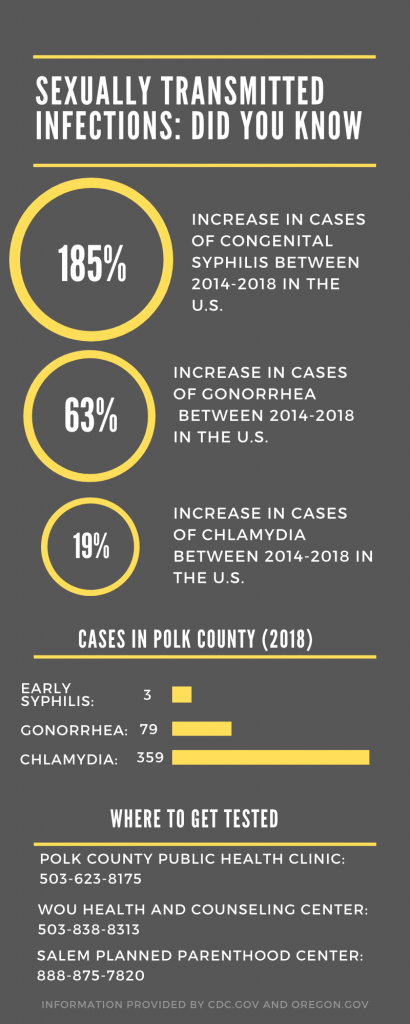
Let’s look at the facts; according to Western’s Health Center’s 2018 survey, ā€œ41.8% of students did not use any method of protection the last time they had intercourse.ā€ On top of this, also in 2018, ā€œ34.1% used the ā€œWithdrawalā€ method of contraception the last time they had intercourse,ā€ or in other words, the ā€œpull-out method.ā€Ģż

When this many people are practicing unsafe sex, it’s inevitable that someone will contract an STI. In fact, according to CDC.gov, in 2017 a total of 1,708,569 chlamydial infections were reported to the CDC in 50 states and in the District of Columbia. Similarly, CDC.gov reported 555,608 cases of gonorrhea in the U.S. in 2017, as well. So the point is, these infections are happening. Regardless of whether a sex ed class teaches safe sex, STIs and STDs are still being spread. So wouldn’t it have been nice if your sex ed class taught you what to do if you actually contracted one of these diseases, rather than try to scare you away from the thought of them?

STIs are heavily stigmatized in our culture. When sex ed courses, or ā€œthe talkā€ with your parents, tries to scare you away from them, or make you feel like you’re a bad person for contracting them, it further enhances that stigma surrounding STIs. When someone does contract one, rather than wanting to take care of it, this stigma will lead to them feeling ashamed or embarrassed to tell their partner(s), a friend or their health care provider.Ģż

I can think of several films or TV shows where the parent or a physician told a kid something along the lines of, ā€œThis is what your genitals will look like if you contract an STI.ā€ It then pans to the child in absolute horror and disgust. But we never hear them say, ā€œIf this does happen to you, here are the steps you can take to make sure you get healthy again.ā€ That last part is important if we actually want people to be healthy, and not just want to scare them away from sex and shame them for contracting an incredibly common infection.Ģż

At the end of the day, that’s what an STI is: an infection. People get infections every day, and when they do, they go see their doctor and get it cleared up. STIs should be treated like any other infection. If you get one, it can be taken care of, and that’s the end of it. Based on the fact that it’s an incredibly common occurance, it’s really not as big of a deal as your sex ed might have made it sound; most clear up from prescribed medication from a doctor. That said, it can become a bigger deal if it is not taken care of or if it’s being spread haphazardly.Ģż

If someone reaches out to you and tells you they have an STI, treat them the same as if someone said, ā€œI think this cut on my hand is infected.ā€ Don’t be disgusted; they’re probably scared and need someone to confide in — be happy they chose you. Then reassure them that they will be okay and show them ways they can get medical attention. Ultimately, we all have to work together to minimize this stigma surrounding STIs.ĢżĢż

If you or someone you know believes they might have an STI or STD, they can contact Western’s Health and Counseling Center at (503) 838-8313. It’s also a good idea to get checked for STIs and STDs regularly if you are sexually active or were recently, as sometimes they don’t present with symptoms.Ģż


Contact the author at chealy16@wou.edu

Infographic by Caity Healy

Opinion: Is there more to self-care than Netflix and bubble baths?

Ashlynn Norton | Digital Media Manager

For a very long time, self-care felt like a very elusive thing to me. What I heard from the majority of society and my friends was that it consisted of taking bubble baths and binging on Netflix. I didn’t know how to start my journey or what it would look like for me. I tried doing things that I had seen others do: cooking, watching Netflix or drinking tea. Even today, I don’t fully know what works for me. There are so many things out there to try, what if I pick the wrong thing?Ģż

I recently — and by recently, I mean two weeks ago — started to learn one way to perceive self-care. The little sliver of information I have regarding self-care came from my learning seminar class taught by Lizzy Harman. Harman, the Assistant Director of Student Success and Advising at the Student Success and Advising Center, has been studying self-care for a little over two years now. With a master’s in rehabilitation mental health counseling, Harman wanted to see how self-care related to advising students.Ģż

Harman thought she knew what self-care was since she has a background in counseling. She soon discovered that she was wrong, and did not understand the subject as well as she thought she did.Ģż

ā€œIt started as a research fascination and then became a personal fascination because it wasn’t going so well for me,ā€ Harman said. ā€œBut also it was important to me that we could kind of talk about it in the field of advising because I think it has been seen as a weakness or a shameful act in a lot of ways and I really wanted it to be a part of the conversation of how we train new advisers.ā€Ģż

Self-care can be defined in many different ways. Harman’s favorite definition is ā€œAny act or experience (that) maintains or enhances your wellbeing.ā€Ģż

ā€œThat’s very highly individualized and based on who you are as a person, and the things that you value and the things that are important to you,ā€ Harman added. ā€œI also prescribe to this belief that self-care is not just about yourself, it’s about the people around you. That the ability to care for yourself means that you are better able to be present and show up for the people around you.ā€Ģż

Harman also believes that self-care has to be preventative and treatment-based.Ģż

Further expanding on the idea, Harman explains ā€œWhere you are doing things to get through stress and challenge, but you’re also taking care of yourself in the long term of building things in your life so that you don’t have to take an escape or take a break from your life,ā€ she said.

Harman has taught me that ā€œescapingā€ is not the best route to take when life gets a little too hard and you need to take some time for some self-care. Self-care is about creating a strong base (prevention) and then occasionally doing something to realign yourself if you get a little off track (treatment).Ģż

So, for those who are like me and are stuck at the fork in the road not really sure which path of self-care to take, I hope this sheds a little light on the best path for you. As for me, I’m going to stick with my salt baths and regular beach trips.Ģż


Contact the author at anorton17@wou.edu

Photo by Rachel HetzelĢż

Opinion: Just a girl’s personal bias on why you shouldn’t just listen to music within your own language

Sage Kiernan-Sherrow | News Editor

Let me begin by first saying: I am in no way particularly knowledgeable about music production or the music industry; my opinions are just that — opinions — and I make no pretense that my tastes are more impeccable than anybody else’s. That being said, my good people of Western, we have a problem: people are avoiding music outside of their own bubbles.

Phrases such as ā€œmusic transcends all boundariesā€ are commonplace, but it seems to me that we keep placing boundaries regardless, most prominently the boundary of language. And, I get it — people fear the unknown, and more than that, many people just don’t have an interest in listening to music that they can’t inherently understand. I confess, too, that I haven’t always been an ā€œinternational music connoisseur,ā€ but I place value in understanding people and learning about things outside of my bubble and in turn, I developed an interest in exploring music through a historical and cultural lens.

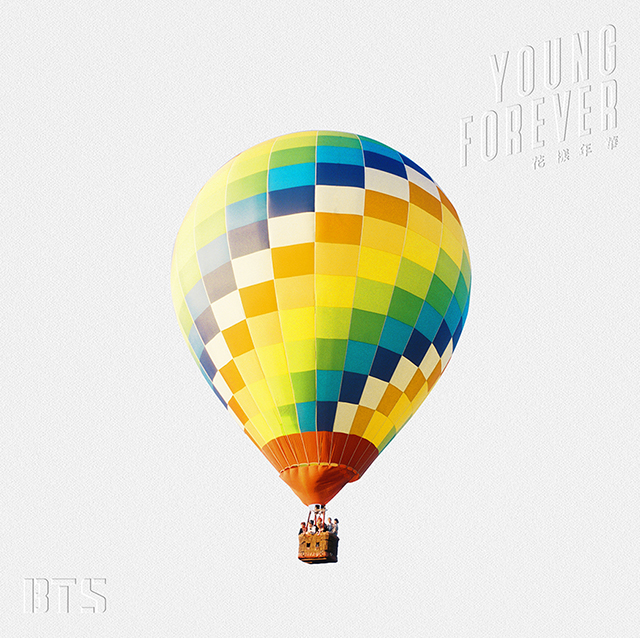
I’m going to come right out and say it, because you’re probably already thinking it, but yes, my first exposure to music not in English was through anime openings. Sound the alarms, I know that’s the ultimate cringey sentence for some. But hear me out because this article isn’t about that; there’s this anime called ā€œNANA,ā€ and the music for that anime was largely sung by a woman named Tsuchiya Anna, who I now credit with getting me interested in J-Rock, which in turn led me to think ā€˜huh, I wonder what else is out there,’ which then got me interested in K-Pop.Ģż

And you might be wondering, what the hell does this have to do with that historical and cultural lens you were talking about? But through my interest in these musical genres, through time spent perusing YouTube for explanations behind lyrical intent, I’ve learned so much about the cultural values and historical significance of certain songs — from how a culture might perceive beauty standards to issues of government control — and I’ve come to have a real appreciation for the artistry of languages that I can’t understand without first doing some digging.Ģż

Here’s a more specific example: I was in the YouTube abyss one night, watching compilation after compilation of music competition videos, when I stumbled upon a video of Elina Ivashchenko competing on ā€œThe Voice Kids Ukraineā€ while singing a cover of Jamala’s ā€œ1944,ā€ a song dedicated to the forced migration of the Ukranian Tatars under the Stalin regime. You might be thinking ā€œthe what? I never learned this in school,ā€ and if that’s what you’re thinking, then I was right on board with you. And that’s my point: my first introduction to the history of a people’s pain under annexation was from a 14-year-old girl on a competition show singing a song so hauntingly beautiful that I did my own research on its meaning which I carry with me now. Music has the power to do that, so why is it that we confine ourselves to the limitations of our perspective languages? The world is so much vaster.


Contact the author at skiernansherrow17@wou.edu

Photo courtesy of

Photo courtesy of

Photo courtesy of Big Hit Entertainment

Opinion: Design should have more white space

Kyle Morden | Designer

In design, white space isn’t just unnecessary waste — it has a purpose. If used correctly, it will provide elements to ensure satisfaction to any viewer. It’s a simple and powerful tool that can be misunderstood by many.

As a student designer, going to the College Media Mega Workshop — hosted by the Associated Collegiate Press and held on July 11–14, 2019 to provide hands-on media training for college students — has given me a better understanding about design. Ron Johnson, a long-time contributor to the Society for News Design, explained to students at the workshop that white space ā€œempowers adjacent elements, so use it to frame your lead package.ā€ Therefore, designers use white space to captivate viewers. It’s something that every design should have to provide quality content.

For those who don’t have design experience, or don’t know much about utilizing white space, white space is more than the color white; it can be any color or background image. There’s two types of white space: micro and macro. Micro white space is the spacing between lines and paragraphs. Macro white space is the large amounts of space often found around the margins of books and websites. Together, they balance and organize content to provide positive experiences for viewers. However, for those who are unaware of this balance white space creates, it can come off as awkward and unclear.

Often times, white space cause problems between clients and designers. Clients may think that it’s a waste of space and that there should be other visual elements. They might say that it looks bland and useless. They might even ask to redo the entire job completely. Here’s what I think: remember why you hired a professional, and let designers do their thing.

Design isn’t about shoving large chunks of information into the viewers’ brains — that’s boring and cruel. Do you ever wonder why there’s white space around groups of text? Imagine reading a book that has text filling to the edge of the page. There would be so much clutter that it’d be hard to focus and retain information — everyone would hate reading. White space allows us to breath and be calm. It brings forth simplicity and keeps our attention to the content.

Not only that, white space can create powerful messages. On Jan. 10, 2013, The New York Times published a blank cover page followed by a headline that said ā€œAnd the inductees areā€¦ā€ A clear and powerful message that translates to the denied induction of players into the Baseball Hall of Fame.

I understand that there are times when white space is used incorrectly. And, that it does look bland when there’s too much of it. Designers can solve this problem by readjusting their eyes. To do this, they can take their eyes off the screen then look back. They can then notice the first thing their eyes point to and ask if it supports the content. If it doesn’t, they’ll have to keep working until their satisfied.

So yes, white space is more than just emptiness. It provides balance and harmony; enhancing the content. Our goal as designers is to create simple designs that will deliver information to you as clear as possible. Because we don’t need more clutter in our lives.


Contact the author at kmorden17@wou.edu

Opinion: Pumpkin spice is back, and so are the monotonous, dull jokes about being ā€œbasicā€

Caity Healy | Managing Editor

October is here, fall has officially begun, and with it, the celebrations and festivities that often come with it. Pumpkin spice is back in rotation at most coffee shops, those little Pillsbury sugar cookies with the ghosts and pumpkins poorly printed on them are back in stores — though, from my experience, they sell out in like, two seconds… so get ā€˜em while you can — and Halloween decor is making its appearance. And, of course, the tweets and memes about ā€œbasic bsā€ are making themselves comfy on our social media feeds once again.Ģż

Look, I get it. A single leaf falls and suddenly these ā€œbasic witchesā€ (I changed the word so I don’t have to keep using asterisks, but you know what I mean) seemingly show up out of nowhere, just crawling out of the sewers like they’re Pennywise or something. A person steps on a perfectly crunchy leaf and the next thing you know they’re wearing a sweater that says something like ā€œpumpkin spice and everything niceā€ written in Rae Dunn font and probably covered in glitter. Before you know it, the basic witch invasion has begun. And it must be so incredibly hard to see several people post about Starbucks’s new pumpkin spice cold brew and NOT say anything at all. So, so hard. But here’s an idea: just… actually try not to?

It feels like we’ve come to a point where we just can’t let people enjoy the things they like. So someone chooses to put their Halloween decorations up before the official first day of fall (it’s me, I’m that someone), is that hurting anyone? Unless they’re putting those decorations up in your space, then you don’t really have a right to say anything at all.Ģż

So someone chooses to literally search for when pumpkin spice is back in rotation at their local Starbucks so they can order their drink the first day it’s back (as you can probably guess, it’s me, I’m still talking about myself), does that have any effect on you whatsoever? If someone can genuinely tell me a way that it is creating a negative impact, short of buying into the commercial schemes that most of us are still guilty of buying into in some way or another, then I’d genuinely like to know. Until then, what right do you have to make people feel bad about it? Because, while I do understand that it is a joke, I definitely still feel a little self conscious when I go to The Press and, under my breath, tell the barista that I want a grande PSL (if you abbreviate it, people in line behind you might not know what you mean. Pro tip).Ģż

To be clear, I’m not advocating for the end of all criticism of things we consume. Everyone is entitled to their opinion. We should be critical of our consumption, and it’s definitely okay to not like something or actively want to partake in it. But the difference between that constructive critical mindset and what is actually happening is that the former would involve a conversation about how we as a society can be better and would respectfully assert your opinion, and the latter is people recycling the same jokes, usually aimed at judging women, that truly just are not funny.

We see this trend all the time. ā€œYou’re playing Christmas music before we even sat down for our totally unproblematic American holiday of Thanksgiving?! How dare you!ā€ The non-existent PNW snow melts and spring arrives.ā€œYou’re actually wearing shorts when it’s barely above 60 degrees outside?! Ridiculous!ā€ Or, of course, ā€œYou like Nirvana? Lol you probably just like their logo — name every single song on every album ever made. By Nirvana and every other band, too, while you’re at it. Fake fan.ā€Ģż

All jokes aside, I really think everyone should make a conscious effort to just try and let people enjoy the little things. Life isn’t easy. I don’t know about everyone else, but college has been nothing short of a struggle for me. So if a festive beverage or a spooky shirt, or an occasional trip to Target’s dollar section for a pair of pumpkin-covered socks makes me feel a little better, just let me have it. Let the basic witch in me live. Because in the end, it’s not hurting anyone… except maybe my bank account. But we don’t have to talk about that.Ģż


Contact the author at chealy16@wou.edu

Photo by Caity Healy

Opinion: Administration — really worried about student safety?

Chrys Weedon | Entertainment Editor

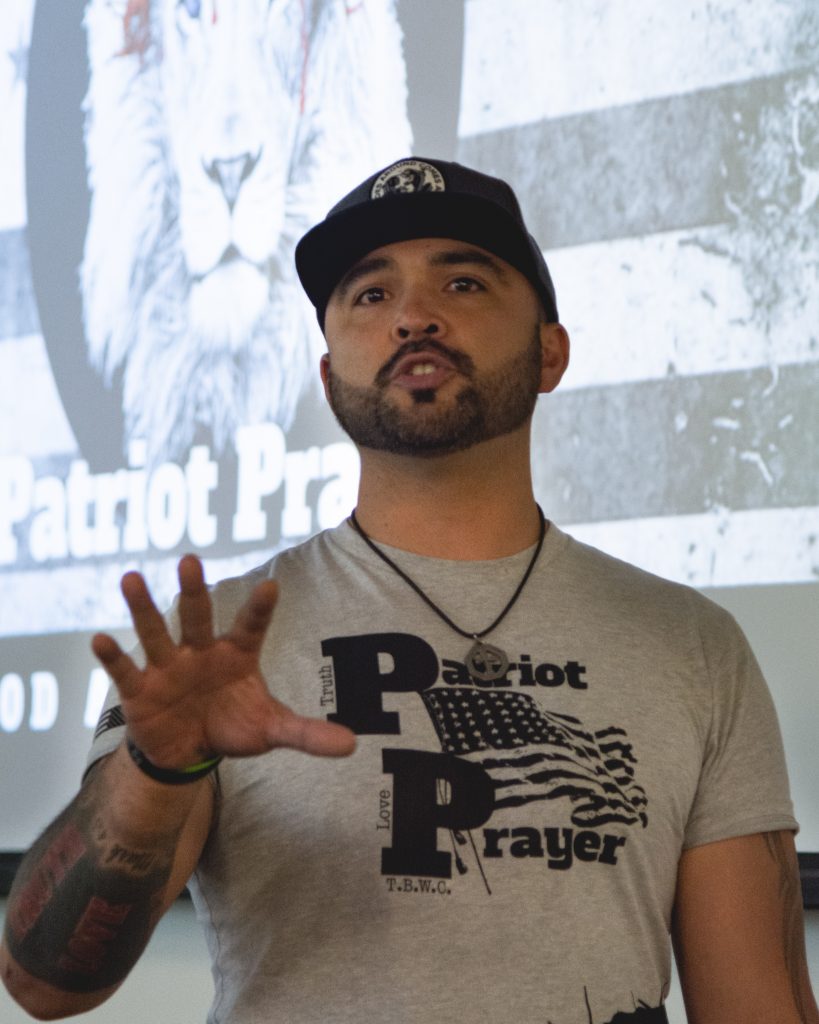
Joey Gibson, defendant in multiple lawsuits for defamation, negligence, trespassing, intentional infliction of emotional distress and several other charges, visited ĄÖ²„ŹÓʵ June 4, 2019 after being invited to speak by the College Republicans club. Gibson is also the founder of a conservative activist group titled ā€œPatriot Prayerā€ who advocate for ā€œfree speech,ā€ gun rights and are against big government.

I’m not going to talk about what Gibson preached about while he was at Western. Honestly, what he has to say isn’t really all that revolutionary ā€”Ģżhis rhetoric isn’t anything that other people haven’t already said. In that way, his visit was pretty anticlimactic — no violence broke out, which was unusual for him. He spoke about God. He spoke about free speech. He spoke about how much of a victim he is, and about how a group of people within America that have historically had the most privilege — white-passing, straight, Christian, cisgender dudes — are under threat.

Gibson claims he follows a nonviolent ideology. Of course, the evidence points to the contrary, but he still claims it. In fact, almost all of Gibson’s rallies have ended in violence. A simple Google search shows that wherever Gibson goes, violence follows.

But, of course, Gibson is extremely careful to make sure he isn’t caught openly advocating hate and destruction. In his speeches, he talks entirely in generalizations and blanket statements and makes sure to put himself in the position of the victim and the martyr. Like many other alt-right hate groups, Gibson paints ā€œliberalsā€ and ā€œAntifaā€ as the enemy, while standing on the soapbox of protecting ā€œAmerican valuesā€ and ā€œthe constitution.ā€

Gibson is a master of manipulating rhetoric and tactics of deflection, and it’s one of the reasons he gets away with claiming to be ā€œnonviolent.ā€ Gibson has a knack for letting his followers do the threatening. Then, when counter-protestors inevitably make their presence known, everything that happens can be claimed by Gibson to be ā€œself defense.ā€

One clear example of this is Gibson’s connections to the Proud Boys. The Proud Boys are an alt-right organization recognized by the Southern Poverty Law Center as a hate group. They are regularly in attendance at Gibson’s rallies and protests, and are known to incite racist, sexist and homophobic violence. Gibson has ā€œdenouncedā€ alt-right groups on several occasions, although according to an article written by William Bradford Nichols for , he has used them as ā€œsecurityā€ for multiple Patriot Prayer events. Patriot Prayer and hate groups such as the Proud Boys often show up decked out in full faux-military gear carrying loaded weapons. So, is this all in the name of self defense? Or is ā€œself defenseā€ simply a thinly-veiled excuse to be as violent as you want while avoiding the consequences? Are people really supposed to believe Gibson ā€œdenouncesā€ these hate groups?

Gibson is right, in a way. He is allowed to say anything he wants. As a journalist, I also value the first amendment. I also value integrity and adherence to the facts, but I doubt Gibson and I would agree on that. But just because he’s allowed to say anything he wants doesn’t mean he’s immune to the consequences. For example, Gibson recently called Luiz Marquez, left-wing activist, a pedophile, despite having no evidence. So now, Marquez is suing him. Weird how that works.

In all honesty, I think Gibson is just another out-of-touch Christian dude crying ā€œvictimā€ who is fueled by a need for attention. The College Republicans knew this and invited him. I wouldn’t expect more from them.

I expect more from the administration. They approved a speaker who has a history of bringing violence everywhere he goes. They invited an individual who is vocally against sanctuary cities on his YouTube channel (titled Joey Gibson) to a sanctuary city — an individual who is currently being sued by multiple people as the result of his actions and the actions of his group. They allowed this individual to speak after he publicly went after the Senate President of ASWOU.
Gibson being invited to campus quickly became about a bigger issue than free speech. It became about just how much the administration values its student body and its students from minority communities who are actively threatened by Gibson’s poisonous ideologies and the groups he surrounds himself with. The administration should know better than to let the students deal with the fallout of their poor decisions.


Contact the author at cweedon16@wou.edu

Photos by Paul F. Davis

Editor’s note: The end of Volume 1

Caity Healy | Editor-in-Chief

I’m going to be entirely real with you all — I’ve been sitting here, staring at a blank screen and wondering how to write this piece for a ridiculously long time (ugh, illusion shattered — I write my stories on a laptop just like everyone else, rather than on the gorgeous 1930s typewriter that sits on my desk). And this is not for lack of words; in fact, it’s the opposite — there is just too much that I want to say. Roughly 12 months ago, I was hired as the Editor-in-Chief of The Western Journal. One year later, here I am: writing my final Editor’s note of The Western Howl, Volume 1.

It’s been… a year. A really interesting, difficult and amazing year. In this 10-month period, so much has changed at the paper. In Fall Term of 2018, a group of eager students made their way to Terry House. Of the 11 students who sat around the table, three of our staff members were returning from the previous year — one being me — and the rest had never been involved with our organization before.

I’ll be honest, I was terrified. I first joined Student Media as Lifestyle Editor during Fall Term of 2017. So, with one year under my belt, I made the shift from Lifestyle Editor to Editor-in-Chief — let me tell you, that alone was a challenge. But, as the Editor-in-Chief, I had to train an almost entirely new staff on what they should be doing… while also learning what I was supposed to be doing… while also undergoing a rebrand. I would be the first editor of the newly titled ā€œThe Western Howl.ā€ Oh yeah, and my Sports Editor graduated at the end of Winter Term, a role that is notoriously difficult to fill, and I had to take that on with my little-to-no knowledge of sports. So, yeah, I was scared.

But now, as the year comes to a close, I realize I have so much to be grateful for. I’m grateful for my staff, as they are the ones who made this transition possible for me. I couldn’t have done this alone, and they were all so quick to learn that it made me feel so much more comfortable than the first day I walked through the door.

I’m grateful for our adviser, Rhys Finch. Without him, we’d all be lost. Like, J.J. Abrams lost. He’s helped turn us into the student journalists we are today; he was always willing to be a mentor, a teacher or even a friend.

And lastly, I’m grateful for you, our dear readers. Seriously — thank you so much for bearing with us during our transitional period, and into our first year as The Western Howl. We do what we do for you; your input is always welcomed and valued.

I didn’t think I’d feel as emotional writing this as I do right now, but Student Media has by far made the biggest impact on my college career. So, once again, thank you all for sticking around. As for next year, I know our new Editor-in-Chief will do an amazing job, and I have faith in the future of this organization as it approaches its 100-year mark to continue creating a high-quality product designed to deliver information that you, our readers, should know. And, with that, I say goodbye, and thank you, once again. We’ll see you next year.


Contact the author at chealy16@wou.edu

Photo by Rhys Finch

Opinion: Accurate captions should be a right, not a privilege

Caity Healy | Editor-in-Chief

The other day, I came across a video about a 14-year-old gamer name Danik Soudakoff. Soudakoff is Deaf, and she is working to make Overwatch a more accessible game by creating signs for specific aspects of the game. For the first part of the video, I really enjoyed it. She was signing, but for those who don’t know ASL, there were captions. About half way through the video, though, her teacher began speaking. There were no captions. So, essentially, the video was only captioned at the benefit of the hearing, not for the Deaf. Or, in other words, a video about Deaf accessibility wasn’t even accessible for Deaf viewers — it wasn’t even accessible for Soudakoff, the subject of the video.

It should be noted that at the point of the video where there was English but no captions, an interpreter was (slightly) present. However, it’s important to understand the concept of décalage time, which essentially means the lag time between what is said, and what is interpreted. Every interpreter has a different décalage time based on the way they process meaning. In this video, what the English-speaker was saying did not correlate with what the interpreter was signing at that exact moment, due to that interpreter’s décalage time. So, once again, the video was not accessible. And, not only that, but due to the unclear interpretation, the viewer was receiving different information all together.

The issue at hand here is larger than this single ESPN video: closed-captioning is seen as an option or a convenience for hearing people, when in reality, it’s a way for Deaf people to have a fraction of the same accessibility that hearing people have.

Let’s paint a picture — you just sat down with a snack on your couch to catch up on your show. You start it, and over the sound of you chewing your chips, you realize you can’t hear the TV. You turn on captions. All better — you can eat, watch, and read captions all at the same time now. Sure, the captions aren’t always accurate, and sometimes specific sentences aren’t captioned at all. But it sure does help as an aid. Isn’t it great that captions are readily available to benefit hearing people?

Let’s paint another picture Ģżā€” a Deaf person just sat down to catch up on their favorite show. Unfortunately, it isn’t available in ASL, so turning on captions will have to suffice. So, that’s what they do. Now, they’re jumping from watching the screen, to reading the captions, and tying that information together. If it’s their only option, it will work. But for whatever reason, the captions just disappeared for a few seconds. Then, it reappeared for a millisecond. What did it say? Was all of the information there? A curse word is spoken in English. The captions decide to censor it — wouldn’t want to taint anyone’s vocabulary. A word is whispered in English and is pretty clearly understood. The captions just leave it as ā€œPERSON WHISPERS.ā€ A word is spoken in English. The captions omit the word entirely. And don’t even get me started on the automatic captioning that YouTube features. Might as well have none at all at that point. Yes, this ā€œequal accessā€ is great, right?

As they are now, captions stand to benefit hearing people, and are rarely a tool for the Deaf. This needs to change. Independence Cinema hosts some open-captioning nights, and that’s a great step in the right direction. But other theater’s should be doing this, and they should be doing it often. As a hearing person, I know that it wouldn’t bother me at all to sit down at a movie and have captions. And, knowing that it could benefit an entire other community makes it all the more worth it. Because as of right now, if a Deaf person wants to see a film and missed one of their open-caption nights, they either have to wear specific glasses that have captioning, or have no captions at all. Don’t get me wrong — I know a lot of Deaf people who are grateful for that technology. But, I also know a lot of Deaf people who are embarrassed to have to use it. Would it really be that hard to have additional open-caption nights?

An argument that I hear on occasion comes from people at sport bars. They’ll say, ā€œI don’t want captions — it’ll interfere with the game.ā€ First of all, there’s no way that you can even hear the commentators in the game clearly over the clinking of glasses, the chatter around the bar and the occasional ā€œEVEN I COULD PLAY BETTER THAN THAT!ā€ or ā€œWHERE’S THE REF?!ā€ from an enthusiastic sports fan. Second, the captions are not going to interfere with your game. I promise, you’ll still be able to see the action if there is a tiny bit of text at the top. And, third, stop being so selfish for a second and consider the fact that there are other people in the bar who want the same access that you have. The whole world isn’t about you, Sports Guy.

Yes, there are steps in the right direction right now. More and more videos are being captioned than ever before. But, entirely accurate captions on every single video is what we should be striving for. Because until that happens, captions are still only a benefit for those that can hear.


Contact the author at chealy16@wou.edu

Photo by Paul F. Davis

Letter to the Editor

To The Western Howl Editor,

ā€œEstablishing lasting peace is the work of education; all politics can do is keep us out of war.ā€ –Maria Montessori

The Early Childhood Studies program faculty is compelled to express our concern regarding the June 4 speaker at the event being held on campus. Our Early Childhood Studies major mission statement highlights how our work is guided by fundamental commitments to educational equity, inclusion, social justice, reflective practice and the development of diverse learners in the field. ĢżWe are compelled to communicate our grave concerns for the safety of the diverse and inclusive ĄÖ²„ŹÓʵ community of students, faculty and staff. We consider the invited speaker’s rhetoric to be a heartbeat away from hate.

We recommend our students avoid this event for their personal safety. ĢżWe ask that others in the Western faculty community join us in expressing dissent. We must speak out against any speech or inciting actions that threaten the safety and security of our community members. ĢżIf we truly are a university community that values inclusion and diversity, we must not quietly acquiesce to any speaker or group espousing hatred, violence or fear under the guise of free speech.

ā€œNo one is born hating another person because of the color of his skin, or his background, or his religion. People must learn to hate, and if they can learn to hate, they can be taught to love, for love comes more naturally to the human heart than its opposite.ā€ Nelson Mandela,


Sincerely,

Early Childhood Studies Faculty

Andrea Emerson, Maria Laine, Linda Craven, Natalie Danner, Cindy Ryan, Erika Lanning

Opinion: The pros of taking a gap year after graduation

Rebecca Meyers | Lifestyle Editor

Europe has a few things we might consider foreign — driving on the other side of the road, calling chips ā€œcrisps,ā€ and having (somewhat) open borders. Another difference between many European countries and the United States is that it’s very common to take a gap year, after graduating either high school or college. Gap years generally serve as a breather period between school and more school, or school and full time work.

Despite what others may think, it doesn’t hinder motivation to return to school or pursue a career according to gooverseas.com, and it’s a way for young people to take full advantage of the transition period in their lives in a positive way.

With all the pros to taking a gap year, I find it unfortunate that they are not more encouraged or considered normal in the States as well. Yet, it’s not hard to figure out why: the United States places such high regard on hard work ā¤ which isn’t necessarily a bad thing ā¤ that taking personal time, let alone a full year or semester, is often viewed as lazy or unambitious. It’s not uncommon to hear college students express guilt over something as simple as getting a full night’s sleep. And then, once they graduate with a mountain of debt, it feels like the most imperative thing is to start working it off as quickly as possible.

It can be really hard to loosen the intensity of this mentality, especially after working hard for four or more years towards specific goals. However, a lot of young adults could likely benefit for taking a gap year rather than jumping straight into a consuming time commitment such as a full time job. It would likely not be beneficial financially, which unfortunately is a significant barrier to some, but could be both physically and mentally restorative. Even those that have part time jobs or internships during a gap year typically have more time than they previously did, and likely will ever again, to recover from a hard few years of living off of caffeine, minimal sleep and monthly test anxiety.

Another reason gap years are an important part of some societies, and should be in the United States as well, is that it may be the only time until a person retires that they have the time and energy to have the experiences they’ve always wanted to, such as devoting time to a hobby or traveling the world. Generally, people expect to have the time to do these things when they retire. To wait that long, however, would mean a person would lose the energy they have now. There’s also the fact that no one is guaranteed retirement ā¤ the fact of life is that, unfortunately, not everyone makes it to old age, meaning some would never have the chance to have these experiences. That’s not even accounting for potential disasters like economic crises or a drastically different planet that would rob people of these opportunities.

Not everyone has the means to take a gap year after graduation. However, other countries have proven that it’s not such a weird societal norm. Of course, other systems can’t be directly transferred; it doesn’t exactly work. However, we can still take note of what has and hasn’t worked and take into consideration what could be beneficial to us as well.


Contact the author at rmeyers17@wou.edu

Photos by Ashlynn Norton

Guest Opinion: Save the birds, act now

[fruitful_alert type=”alert-info”]Disclaimer: The views and opinions expressed in guest opinions are those of the authors and do not necessarily reflect the views of The Western Howl.[/fruitful_alert]

Kaylin LaClair | Guest Contributor

Let’s take a moment and put the politics aside. The fact is, we currently have a leader who is not prioritizing the environment and that is drastically having an impact on our world. When we know that we are negatively impacting the environment around us we must take that responsibility and hold ourselves accountable.

I regularly go to the gym every day and on this particular day, I walked upon a little olive green bird. I almost stepped on the little guy, but then it managed to skitter off and I paid no more attention to it. After about an hour at the gym, I left and walked outside to find this same bird on the ground dead. It had hit the window twice in such a short span of time. A young woman walked out, saw the bird and commented that there were two more on the ground just the day prior. Unfortunately, two men were walking by and threw the bird in the trash with no regard. When looking at the windows I saw a clear reflection of the sky, clouds, and trees in front of the parking meters. I can distinguish the reflection, however, the birds cannot and in the United States alone close to one billion birds die each year due to window collisions, according to abcbirds.org.

I contacted the gym personnel and informed them of what had happened and they agreed that action needed to be taken. One of the employees even followed up with me about a week later and said that there were two more casualties. It is heartbreaking to know that we are directly impacting our environment around us with such little regard and with this kind of issue, there is an easy and fast solution. I emailed the director and the response I received was on April 23 and was assured something would be done in the coming couple weeks.

For birds, they are unable to distinguish the reflections on the glass from reality. In order to remedy this, the reflections need to be broken up and this can be done a number of inexpensive and effective ways. Two methods that Western should be able to accomplish with ease is utilizing tape on the outside of the windows meant for birds, or use decals. Utilizing decals would be a great way for Western to advertise its clubs, its fitness center and community amenities. Western could use this as another selling point for prospective students by demonstrating that we care about our environment and our impact.

Every life in this world matters; it is important that we do the best we can to live in harmony with the other animals and species around us. Without them, the world we know would not be possible. It is incredibly important that we as humans take responsibility for the impacts that we have with our surrounding environment. If we know that we are directly having a negative Ģżimpact we need to act on that accordingly and swiftly.


To publish a response, contact the editor of The Western Howl at howleditor@wou.edu

Photo by Ashlynn Norton