


Content Warning: This story shares quotes from residents of Polk County explicitly describing their experiences with racism. These quotes may be seen as graphic and triggering.
Caity Healy | Managing Editor
“Everyday we are met with hate.” This is what Dallas, Oregon resident Crystal Hayter had to say as to why her and her wife, Jasmine Hayter, decided to protest on June 4 in Monmouth, Oregon. Crystal self-identifies as a caucasian woman, and Jasmine self-identifies as an African American woman. They shared what a day in their life looks like for them as Polk County residents.
“She wasn’t allowed to go on my lease after we were married because she’s African American … There are certain businesses that refuse to do service with my wife unless I bring them the money. They will not take it out of her hand,” Crystal shared. “Just two days ago, our neighbors were out on the porch telling her, ‘Go back inside N-word.’ And honestly, that’s our everyday life in Polk County.” She shared stories of people in Dallas threatening to run them out of town, saying they should be tarred and feathered, and even saying that they miss the town’s “lynching tree.”
Jasmine went on to add that, “I want this to end, and I want this to end peacefully. People need to stop dying.” Her voice trembled as she spoke and she shared her story. Jasmine is one of many who shared sentiments as to why they were protesting on the intersection of Pacific Avenue and Main Street.
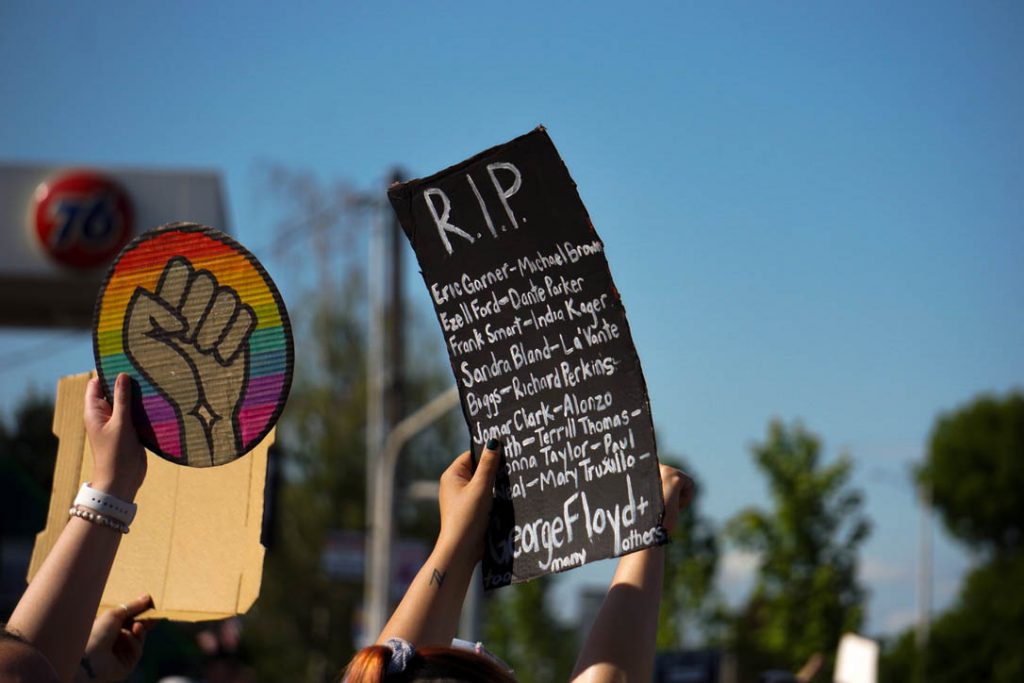
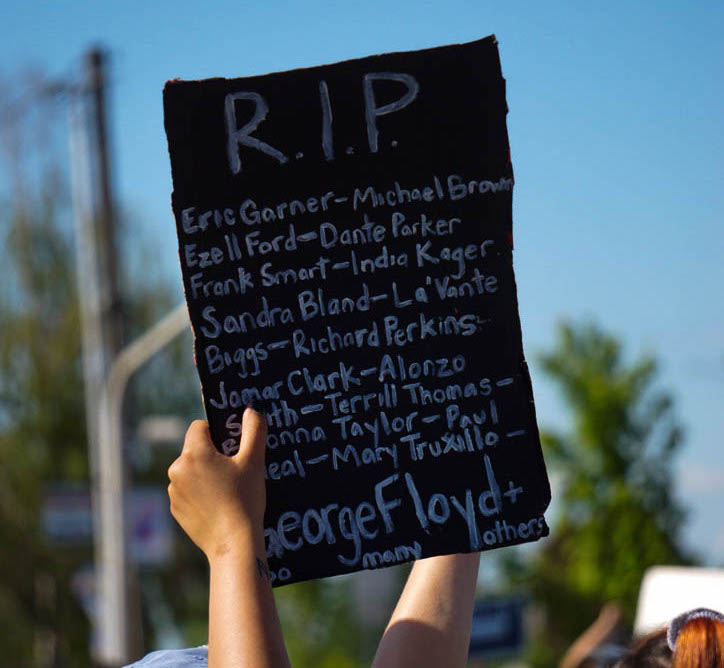
Carrying signs with messages such as “Black Lives Matter” and “No Justice, No Peace,” at 4:30 p.m. on June 4, as well as on June 3, people took to the streets to protest police brutality in the name of George Floyd, Breonna Taylor and other black people whose lives were taken by police. Most wearing masks, as this protest came in the midst of the COVID-19 pandemic, the cloth over their mouths could not keep them silent. Chants and honks were heard from far reaching ends of Monmouth. Some were there to be heard, others were more quiet but attended as an act of solidarity, some were passing out water bottles to those in attendance, but there was a general consensus amongst those present: change needs to happen.
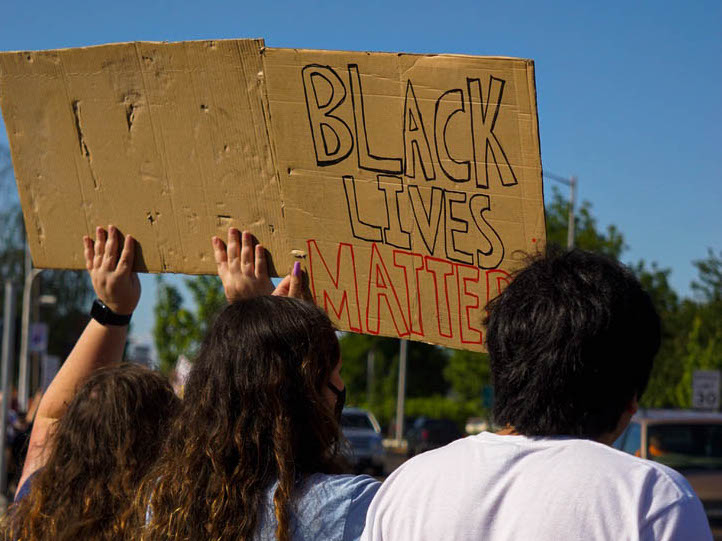
Organizer of the event, Monmouth resident Carol McKiel, along with her husband Allen McKiel, stood alongside everyone holding their “Black Lives Matter” signs. Carol explained that the reason she formed this event was due to her questioning, ‘what can I do?’
“I just got up on Monday morning and thought, I have a ‘Black Lives Matter’ sign, and I’m going to stand on the street corner and I’ll do that as long as I need to.” So, Carol, along with Allen and a couple of her friends, did just that. It started with just the four of them, but by contacting their neighborhood, it slowly reached more people. By June 3, Carol claimed that there were over 120 people protesting on the street with her.
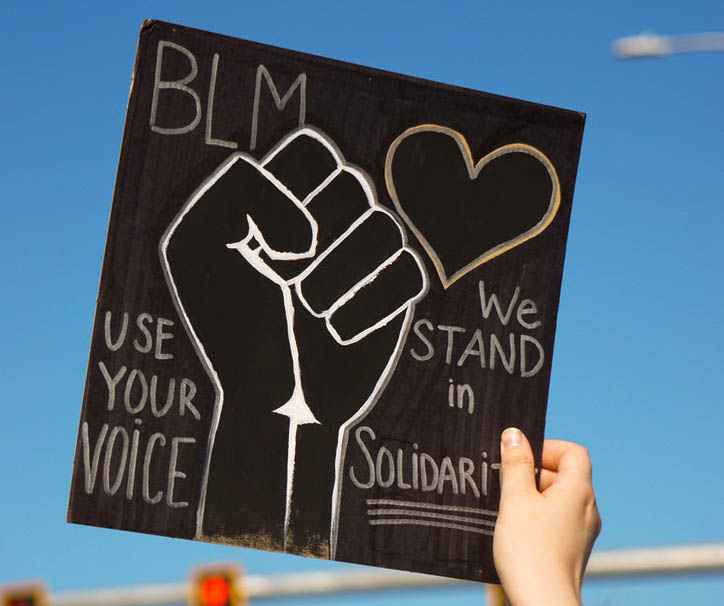
“I think what’s really significant is we have white people standing out here with ‘Black Lives Matter’ signs … White people need to take this on if we’re going to fix it,” Carol added. Allen, her husband, chimed in as well.
“This is a way for everybody to show everybody else that we’re concerned. We’re not alone in being concerned and this is really, really terrible, and we’re waking up to the fact that it’s been terrible all along.”
Another resident of Monmouth, one who lives in the same neighborhood as Carol and was invited to the protest through her message, shared a similar sentiment. Her name is Rebecca Salinas-Oliveros, and she self-identifies as a Latina woman. She expressed her concern with what’s going on, and especially with how it will reflect on her daughters.
“I’m out here to show my daughters that there’s still a little bit of hope. They’ve been really grieving. And this has been very hard for them,” Salinas-Oliveros said. “And as a mother, I have to be real with them. It’s hard to maintain hope, and just to make sure they know, yeah, it’s probably not going to get better any time soon, but we have to continue to try.” However, she expressed some hope and optimism due to the fact that Monmouth, a rural town, was able to come together for this protest.
“I didn’t expect it. I don’t think anyone really knew what to do. And this… this helps just not to be sad all the time. It gives me hope that even in a small town, there are white people willing to step up,” Salinas-Oliveros added. “And that’s really what we need. We need white people to step up because that’s where the power and the privilege is in our country. And they’re the ones that are going to create the change and people are going to listen to. So seeing the number of white people out here gives us hope.”
While Salinas-Oliveros did express a level of optimism, not all in attendance felt the same. One man, who chose to remain anonymous, opened up and shared what he was thinking while protesting.
“Being a colored person myself, it just hurts bad,” he said. “When this is all over, I’m still colored. It’s going to happen again. Nothing’s gonna change. All we can have is hope.” He added that, “I don’t know if tomorrow I’m going to make it … I could be going down the street and all of a sudden I get pulled over and I’m gone. Just like that.”
Noticeably, there were no Monmouth police officers present at the event; this didn’t sit right with him.
“They haven’t been here. They were not seen, and I’m like, do they even care? The people care who are here protesting, but do the cops care? The way I see it, they don’t.” He was not the only one who was uncomfortable with the lack of police solidarity.
“We don’t even see any cops around here, so we don’t even know if they’re listening to us. We need to see change from them,” said another anonymous source. “We come out here to support this movement but we don’t know if anything is gonna happen because they’re just sitting over there doing whatever they want. We don’t see support from them.”
The protesting continued from 4:30 to 5:30 p.m. For the most part, it was met with honks, waves and smiles. There was some retaliation, though; some waved their middle fingers at the protestors, some yelled “All Lives Matter” in return to their chants, and some even went as far as to yell “F–k you” to the protestors. Thirty minutes later, and just eight miles away, protests were happening in a neighboring town: Dallas.
The protest in Dallas, organized by resident Chaney Poulsen, was considerably smaller than the one in Monmouth. It was met with some waves and approval, with even the local Dominos donating a few pizzas to the cause. But similarly, it was met with two people waving “Trump 2020” signs, one yelling at the protestors “Trump 2020” and many heads shaking to express disapproval. In attendance at this protest were two people who also attended the one in Monmouth, Crystal and Jasmine Hayter.
“Enough is enough,” Crystal concluded. “(Jasmine) could be the next person, and I’m not okay with that.”
The protests in Monmouth are planned to continue daily in the same place at 4:30 p.m. Carol McKiel says to bring umbrellas, because they’ll be out there shouting “Black Lives Matter” come rain or sunshine.
Contact the author at chealy16@wou.edu
Photos by Hannah Greene
