


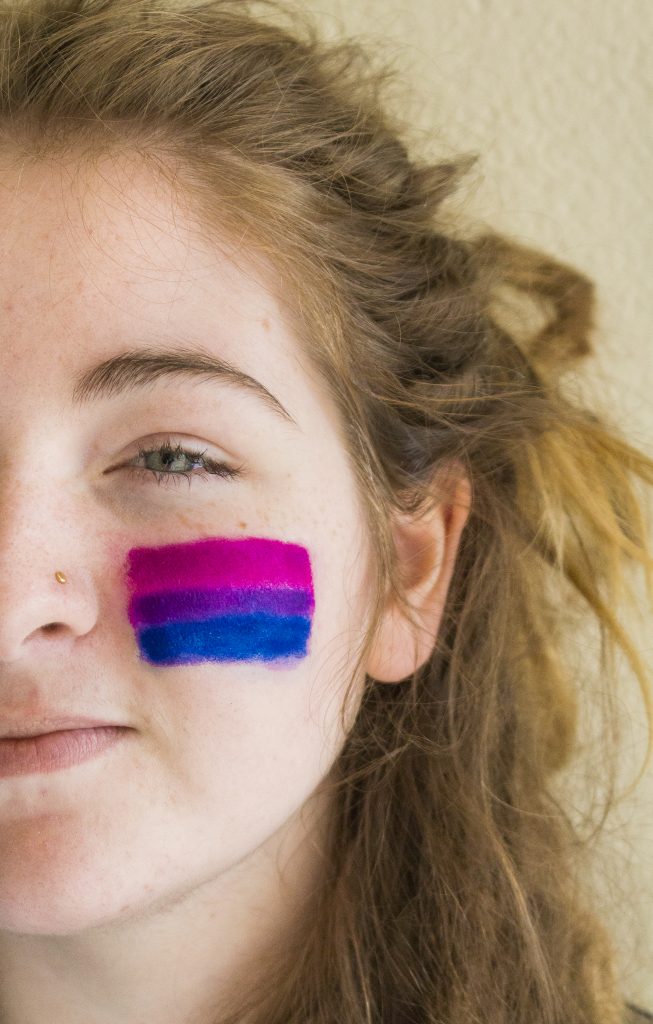
Chrys Weedon | Entertainment Editor
It is nearly common knowledge in the psychological community that the LGBTQ+ community experiences a disparate amount of mental health issues when compared to their straight counterparts. According to the Bisexual Resource Center, 40% of bisexual people report considering or attempting suicide, compared to roughly 25% of gay and lesbian folks.
Studies from the Williams Institute have discovered that people who identify as bisexual make up approximately half of the LGBTQ+ population, but only 28% of those people are out to their loved ones. Why these disparities? Biphobia has been posited as a cause.
The term “biphobia” is defined by the BRC as “mislabeling bi+ people as lesbian, gay or straight, even when they come out as bi+.” What does “bi+” mean? I’ll come back to that.
A lot of biphobia isn’t blatant. Instead, it is often buried deep within subtle actions, or microaggressions.
In his book, “Microaggressions in Everyday Life,” Derald Wing Sue defines microaggressions as the “constant and continuing reality of slights, insults, invalidations and indignities visited upon marginalized groups by well-intentioned, moral and decent family members, friends, neighbors, coworkers, students, teachers, clerks, waiters and waitresses, employers, health care professionals and educators.”
Biphobia is really more common than many people, straight and LGBTQ+ alike, think. For example, phrases are often uttered such as, “you’re just confused”; “bisexual people just want to sleep with everyone”; “bi people are more likely to cheat”; “can’t you just pick one?”; “you aren’t really bi if you’re dating (opposite gender)”; “you aren’t really straight if you’re dating (same gender)”; I could really go on.
Ignorance toward bisexuality and the erasure of bisexual identities is rampant in the LGBTQ+ community as well. Many gay or lesbian folks just assume that identifying as bisexual is only a baby step toward “actually” coming out as gay. Many people simply don’t understand what bisexuality means.
Now back to that word: “bi+.” This term simply acknowledges that different people interpret the label “bisexual” in different ways. Some people define bisexuality as being attracted to multiple genders, or more than one gender. Some people explain the term in the most stereotypically understood way: being attracted to men and women, or masculine and feminine people.
Sometimes people hear the word “bisexual” and they get stuck in that mindset that I just explained: bisexual people are only attracted to men and women, and it turns into a whole mess of “well does that mean bisexual people are just obsessed with someone’s genitals?” The answer? No. Bisexuality does not inherently mean that someone doesn’t acknowledge the complexities of gender. What the issue really comes down to is that some people don’t even want to get to know someone and what their bisexual identity means to them before they go and jump to all sorts of different conclusions.
I have experienced a lot of biphobia in my life, and I’ve watched my loved ones struggle with it as well. Experiencing biphobia from my own community has hindered me from truly accepting my identity, and in some cases, it has stopped me from coming out. I’ve been told I’m not gay enough to be Queer, and not straight enough to be straight. I’ve had friends question the validity of my identity. I’ve been called transphobic. I’ve been interrogated with “oh, you’re bi? But have you ‘tried’ both? Have you had sex with men and women?” This essentially says that if I hadn’t “tried both” I wouldn’t be a legitimate bisexual and I’d have my membership card revoked.
I think the LGBTQ+ community needs to be better. Writing off biphobia as simply a “straight” issue is ignoring a big part of the problem. How can we expect straight people to be accepting of our community if we aren’t even accepting of each other? There is no excuse to be this oblivious anymore. Bisexual people exist and we need your support too.
Contact the author at cweedon16@wou.edu
Photo by Ashlynn Norton
